 EN
EN

Wholesale Sourcing Guide: How to Evaluate an Electrical Enclosure Manufacturer in China
Sourcing electrical components from China offers undeniable cost advantages, but for B2B distributors, OEMs, and international project managers, the primary risk is "Quality Variance." In the electrical industry, a single failure in an enclosure’s seal or structural integrity can lead to catastrophic damage, site downtime, or even legal liability. Selecting the right manufacturing partner requires a systematic, data-driven audit of their technical, operational, and compliance capabilities. In this guide, we provide the framework for auditing a top-tier Chinese enclosure factory.
1. The Compliance Pillar: Beyond the Logo
Every factory in China will claim to have "CE" or "ISO" certifications. A professional B2B buyer must verify the *authenticity* and *relevance* of these documents to ensure they aren't just empty marketing claims.
- ISO 9001:2015: This is the baseline. It proves the factory has a documented quality management system. Ask for the certificate number and verify it on the certifying body's official website. Check the "Scope of Certification" to ensure it actually includes the design and manufacture of electrical enclosures.
- TUV / CE / UL: These are product-specific safety certifications. Ensure the certificate covers the specific range of enclosures you are sourcing (e.g., "Wall-mount metal enclosures up to IP66"). A "CE" mark on a plastic box doesn't necessarily mean the metal boxes from the same factory are certified.
- RoHS & REACH: Critical for the European and North American markets to ensure materials are free from restricted hazardous substances like lead, mercury, and cadmium. This is especially important for the plastic gaskets and powder coatings.
- IP Test Reports: Don't just look at a sticker. Request the full laboratory test report for IP66/67/68. Check if it was performed by an independent, accredited third-party lab (like TUV or SGS) and ensure the model number in the report matches your order.
2. Production Capacity and Supply Chain Stability
A manufacturer’s output is a direct indicator of their ability to support your scaling and handle peak demand without compromising lead times.
- Monthly Output: B&J Electrical, for example, produces 400,000 units per month. This scale ensures that even during peak seasons or global supply chain disruptions, we can maintain stable lead times for our wholesale partners.
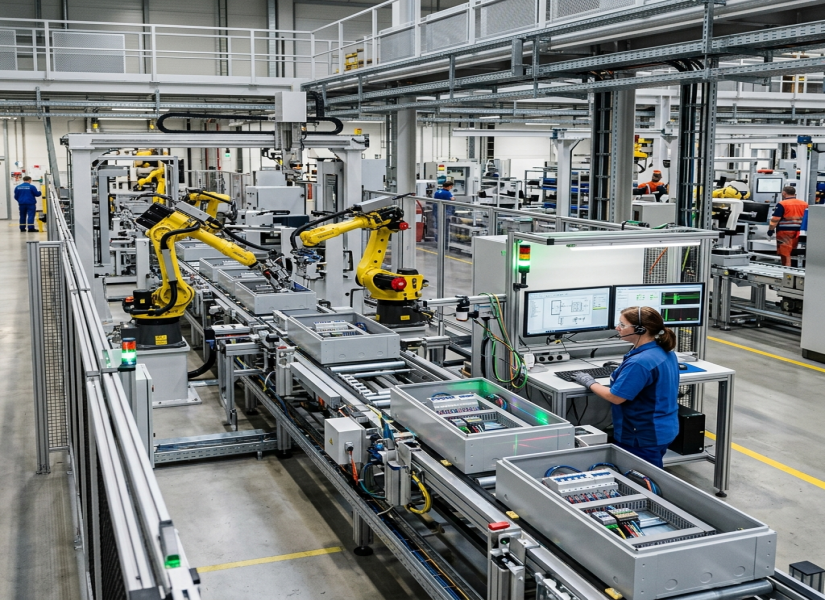
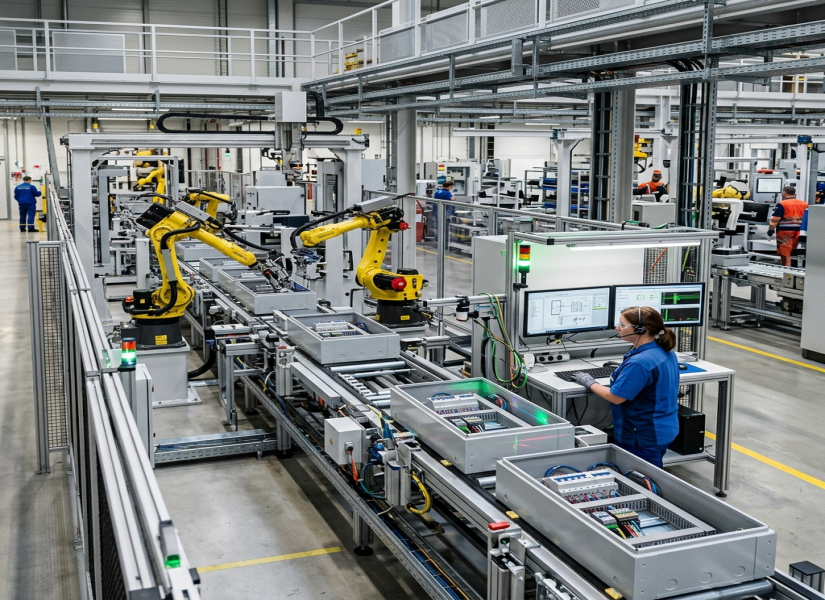
- Automation and Equipment: A modern factory should use CNC laser cutting (for precision edges), robotic welding (for consistent, leak-proof seams), and automated powder coating lines (for uniform thickness). Automation reduces human error and ensures that the 1,000th box is identical to the first.
- In-House Testing Facilities: Does the factory have its own salt-spray chamber, IP testing tank, and impact testers? Factories that can test in-house during the production run have much tighter quality loops than those that only test at the end.
- Raw Material Sourcing: Does the factory maintain a strategic stock of 304/316 stainless steel and high-grade Polycarbonate? In a volatile market, raw material availability is the difference between a 3-week and a 3-month lead time.
3. R&D: From CAD Blueprint to Working Prototype
Off-the-shelf products rarely meet all the needs of a sophisticated B2B project. Your manufacturing partner should act as an extension of your own engineering team.
- Technical Consulting: Can they advise on the thermal management of your components inside their box? Can they calculate the required ventilation for a specific heat load?
- Customization (OEM/ODM): Do they offer custom colors (RAL matching), silk-screening of your corporate logo, or pre-punched holes based on your CAD drawings?
- Sample Speed: A world-class factory should be able to deliver a custom-tooled sample within 3-7 days. At B&J Electrical, our rapid prototyping team allows our clients to move from concept to market significantly faster than their competitors.
- BIM and CAD Support: Do they provide .STP or .DWG files for your engineers to integrate into their overall system designs?
4. The Quality Control (QC) Lifecycle: A 360-Degree View
A "One-Stop Service" manufacturer should manage quality at every stage of the production cycle:
- IQC (Incoming Quality Control): Testing raw steel thickness with ultrasonic meters and verifying plastic purity before production starts.
- IPQC (In-Process Quality Control): Real-time checking of weld penetration, gasket adhesion, and dimensional accuracy at each station.
- FQC (Final Quality Control): 100% visual inspection for paint defects and randomized IP testing before the goods are packed.
- Packing & Logistics Audit: Ensuring that the goods are packed in heavy-duty, palletized cartons to withstand the rigors of international sea freight and multiple trans-shipments.
The B&J Advantage: 25 Years of Trust
With over two decades of specialized expertise in distribution boxes, B&J Electrical has built a global reputation on transparency and technical excellence. We export to over 50 countries, navigating the highly regulated markets of Europe, North America, and Australia. Our "One Stop Service" model means we take full responsibility for the entire lifecycle of your product—from initial design and material selection to final quality inspection and global logistics. When you source from B&J, you're not just buying an enclosure; you're securing a reliable, transparent, and technically superior link in your global supply chain.
Table of Contents
- Wholesale Sourcing Guide: How to Evaluate an Electrical Enclosure Manufacturer in China
- 1. The Compliance Pillar: Beyond the Logo
- 2. Production Capacity and Supply Chain Stability
- 3. R&D: From CAD Blueprint to Working Prototype
- 4. The Quality Control (QC) Lifecycle: A 360-Degree View
- The B&J Advantage: 25 Years of Trust