 EN
EN

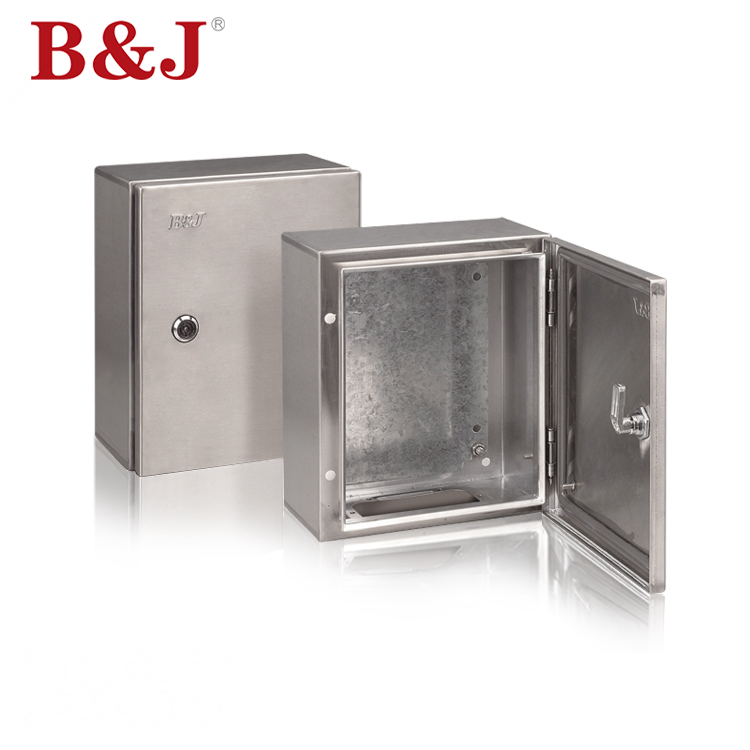
For coastal electrical and control installations, the short answer is that 316 is usually the safer long-term choice, while 304 can still work in lower-salt zones with careful design and maintenance. The reason this choice matters is simple: a stainless steel enclosure in a marine atmosphere faces chloride exposure, persistent humidity, and salt-laden wind that accelerate localized corrosion. In practical project terms, the grade decision affects not just service life, but inspection frequency, seal integrity, operating risk, and total ownership cost over many years.
A coastal project rarely fails because of one dramatic event; it usually degrades through small, cumulative failures around hinges, fasteners, cutouts, and gasket interfaces. That is why selecting each stainless steel enclosure grade must be tied to site-specific salinity, washdown practice, maintenance resources, and downtime tolerance. When teams evaluate 304 versus 316 this way, the decision becomes less about upfront material price and more about reliability under real operating conditions.
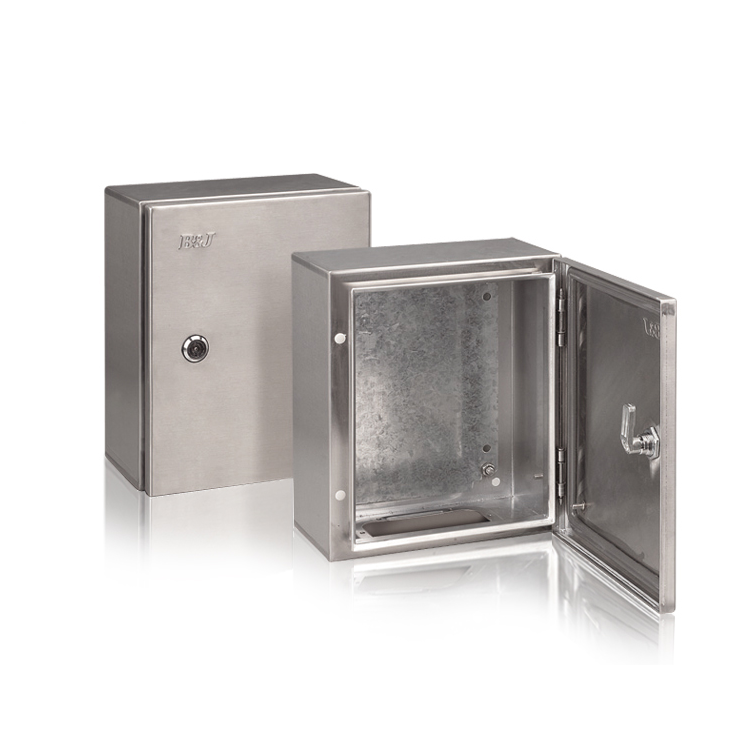
Selection Logic That Fits Coastal Reality
Material chemistry and chloride resistance in daily operation
The core technical difference is molybdenum content in 316, which improves resistance to chloride-driven pitting and crevice corrosion. In coastal air, salt particles settle on surfaces and hold moisture, creating aggressive micro-environments where a stainless steel enclosure can start corroding at edges or sheltered points. 304 performs well in many inland industrial settings, but under regular marine exposure, its corrosion margin is thinner.
From a decision standpoint, chloride exposure should be treated as a continuous operational load rather than an occasional event. Even where visible rust is not immediate, surface tea staining and micro-pits can grow over time and undermine confidence in a stainless steel enclosure used for controls, drives, and communication assets. A 316 stainless steel enclosure generally provides more forgiveness when cleaning is delayed or environmental severity rises seasonally.
Distance from shoreline and microclimate effects
Project teams often ask for a fixed coastline distance where 304 becomes acceptable, but exposure is shaped by local wind direction, elevation, and shielding. A stainless steel enclosure one kilometer inland can experience harsher salt deposition than another unit closer to shore but protected by structures and terrain. This means geographic distance alone is a weak predictor for grade selection.
A better approach is to classify microclimates by observable signs: salt residue frequency, condensation patterns, and corrosion seen on nearby hardware. Where these signs are persistent, a 316 stainless steel enclosure should be considered baseline rather than premium. In milder microclimates, 304 can remain viable when paired with disciplined inspection and cleaning routines for each stainless steel enclosure in the asset group.
How 304 and 316 Affect Lifecycle Cost
Upfront price versus long-term intervention
304 is usually less expensive initially, which can look attractive in budget-constrained projects with many panels. However, a coastal installation should evaluate total intervention cost, including touch-up, passivation recovery, hardware replacement, and technician labor around each stainless steel enclosure. Small recurring tasks across dozens of cabinets can erase early savings quickly.
With 316, procurement cost is higher, yet expected corrosion-related interventions often drop, especially in exposed zones. That reduction can stabilize maintenance planning and reduce unplanned callouts tied to one compromised stainless steel enclosure affecting a whole process line. In other words, grade choice changes not only material spend, but operational predictability.
Downtime risk and production impact
Corrosion around latching points, door seams, and cable entry interfaces can make access difficult or compromise ingress protection. Once this happens, a stainless steel enclosure may no longer support the same protection level under weather cycles, raising risk for sensitive electrical components. The direct cost is repair, but the larger cost is process interruption.
For critical coastal assets such as pumping, treatment, and remote telemetry nodes, conservative material selection is often justified by downtime economics alone. Choosing a 316 stainless steel enclosure in high-exposure areas can reduce the probability that environmental degradation becomes an operational event. When availability targets are strict, this risk-based logic is usually stronger than unit-price comparisons.
Design Details That Change the 304 vs. 316 Decision
Crevice-prone geometry and hardware consistency
Not all cabinet designs behave the same in marine environments. Deep recesses, overlapping seams, and poorly drained ledges can trap salty moisture and accelerate crevice attack regardless of grade. A stainless steel enclosure with cleaner drainage paths and tighter fabrication quality can outperform a heavier design that traps contaminants.
Hardware material consistency is equally important. If hinges, fasteners, or mounting accessories are mismatched, galvanic and localized corrosion can begin at contact points and spread aesthetic or functional damage to the stainless steel enclosure body. In coastal projects, 316 body material paired with aligned hardware specification creates a more coherent corrosion strategy than isolated upgrades.
Sealing system durability and inspection practicality
Gasket performance is often overlooked when teams focus only on steel grade. A stainless steel enclosure that retains door alignment and compression over years will protect internal equipment more effectively than one that distorts or binds due to corrosion around mechanical interfaces. Grade selection therefore supports sealing performance indirectly through structural stability.
Inspection access also matters for field teams. If a stainless steel enclosure is easy to clean, open, and resecure, maintenance compliance tends to improve, and corrosion issues are found earlier. For many users, this is where a properly specified stainless steel enclosure provides operational value beyond basic material labels.
Practical Scenario Guidance for Coastal Projects
When 304 can be a defensible choice
A 304 stainless steel enclosure can be reasonable in coastal regions when the installation is partially sheltered, direct salt spray is rare, and routine cleaning is realistic. This often applies to secondary control points inside covered service areas where airflow is moderated and contamination levels are lower. The decision remains defensible when the process impact of localized corrosion is limited and replacement access is straightforward.
In these circumstances, project teams should still define explicit maintenance intervals and acceptance criteria for each stainless steel enclosure. Without that discipline, 304 selections can drift into high-exposure duty they were never meant to handle. A documented operating envelope is what keeps 304 cost-effective rather than risky.
When 316 should be treated as standard
A 316 stainless steel enclosure is the stronger default for open coastal infrastructure, waterfront utility corridors, desalination or pumping perimeters, and sites with frequent wind-driven salt deposition. It is also preferred where washdown chemicals and marine humidity create persistent corrosive conditions. In these environments, the corrosion reserve of 316 supports longer, steadier performance.
Teams should also elevate to 316 where access is difficult or where a failed stainless steel enclosure could halt critical operations. Remote assets, unmanned nodes, and systems with strict uptime commitments usually benefit from conservative material selection. The value comes from fewer corrosion-related surprises, not just cleaner appearance.
FAQ
Is 316 always required for every coastal stainless steel enclosure?
No, but 316 is often the safer baseline in moderate to severe marine exposure. A 304 stainless steel enclosure can still be suitable in sheltered, low-salt microclimates with consistent cleaning and inspection. The key is matching grade to real exposure and maintenance capability, not using coastline distance as the only rule.
How quickly can a 304 stainless steel enclosure show corrosion near the coast?
There is no universal timeline because deposition rate, humidity cycles, and enclosure geometry vary by site. Some locations show staining early, while others remain stable for long periods with proper care. What matters is that a 304 stainless steel enclosure has less chloride tolerance margin, so inspection frequency should be higher in coastal service.
Does enclosure grade alone guarantee long service life?
No. A stainless steel enclosure performs as a system that includes design details, gasket quality, hardware compatibility, installation practice, and maintenance execution. Even a 316 stainless steel enclosure can underperform if water traps, contamination buildup, or mixed-metal issues are ignored over time.
What is the most practical way to decide between 304 and 316 for new projects?
Use a risk-based matrix combining exposure severity, criticality of the load, maintenance access, and downtime cost. Then assign the stainless steel enclosure grade by zone rather than using one blanket decision for the whole site. This method usually leads to 316 in harsh or critical areas and selective 304 only where conditions and maintenance controls clearly support it.