 EN
EN

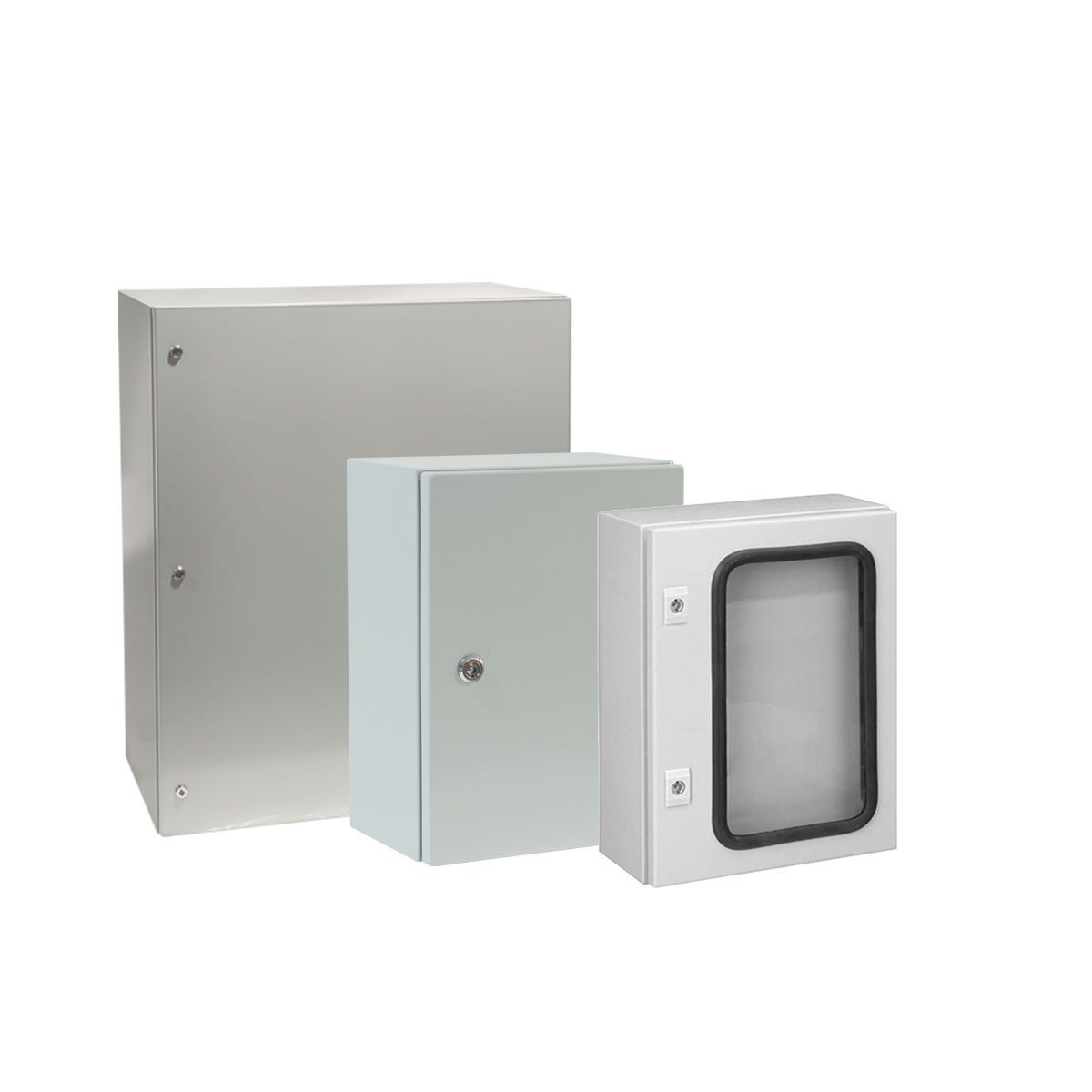
Protecting a steel enclosure from rust is not merely a cosmetic concern — it is a fundamental requirement for maintaining structural integrity, electrical safety, and long-term operational reliability. Whether a steel enclosure is installed outdoors in a corrosive marine environment, inside a humid industrial facility, or mounted on a wall exposed to temperature cycling, the right anti-rust paint and application method can mean the difference between decades of service and premature failure. Choosing the wrong approach often leads to flaking coatings, corrosion creep, and costly replacement cycles that could have been avoided from the start.
This article examines the three most widely used anti-rust paint application methods for a steel enclosure — spray coating, roll coating, and dip coating — and breaks down the practical results each method delivers. By understanding how each technique interacts with the metal surface, coating chemistry, and production or maintenance context, engineers, procurement managers, and maintenance teams can make more informed decisions. The comparison is not about which method sounds best in theory, but about what each method actually achieves on a real-world steel enclosure under industrial conditions.
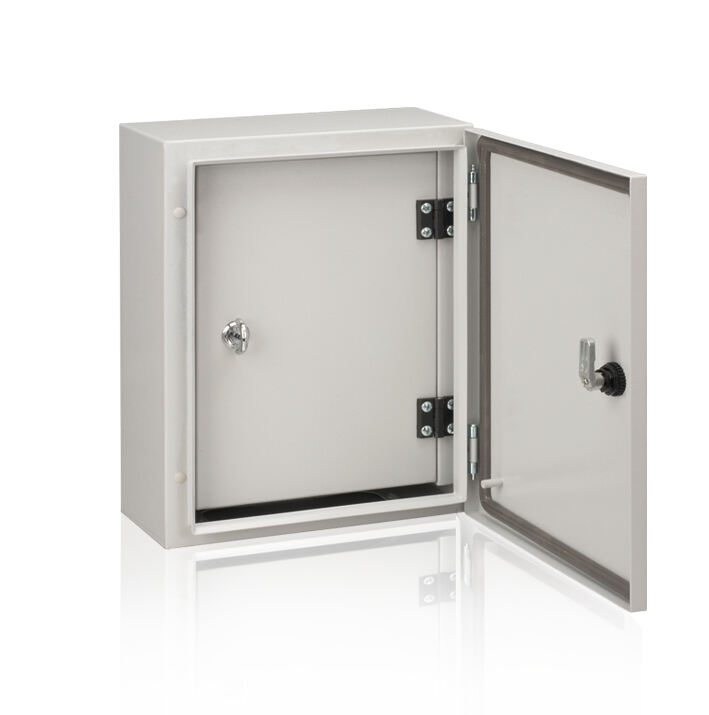
Why Anti-Rust Paint Selection Matters for a Steel Enclosure
The Unique Corrosion Challenges of Steel Enclosures
A steel enclosure faces corrosion threats that differ significantly from general structural steelwork. Because it is designed to house sensitive electrical or electronic components, the enclosure must maintain a sealed, clean internal environment while its external surface withstands moisture, salt, chemicals, and mechanical abrasion. Even minor coating failures on the exterior of a steel enclosure can allow rust to form, and once rust begins migrating through seams or mounting holes, internal contamination becomes a real risk.
Steel is inherently reactive. Without a barrier between the base metal and atmospheric oxygen and moisture, iron oxidizes to form ferrous hydroxide, which then converts to the familiar red rust. For a steel enclosure used in outdoor or demanding industrial settings, this process can begin within weeks if the coating is inadequate. The anti-rust paint must therefore form a continuous, adherent, and chemically resistant film over every surface of the enclosure, including edges, corners, and weld seams where coating coverage is most difficult to achieve.
The method used to apply the anti-rust paint directly determines how well these challenging areas are covered. This is why the choice between spray, roll, and dip is not arbitrary — each method has a distinct coverage profile that either addresses or ignores the specific geometry of a steel enclosure.
How Paint Chemistry Interacts with Application Method
Modern anti-rust paints for a steel enclosure include epoxy primers, zinc-rich coatings, alkyd-based rust inhibitors, and polyurethane topcoats. Each of these chemistries responds differently depending on whether it is atomized through a spray nozzle, spread with a roller, or applied via full immersion. Viscosity, surface tension, solvent flash-off rate, and film-build characteristics all interact with the application method to produce a coating of varying thickness, uniformity, and adhesion strength.
For example, a high-solids epoxy that performs excellently in a dip tank may sag heavily if applied by spray at the same film thickness. Conversely, a fast-drying alkyd primer designed for spray application may develop pinholes when rolled at high speed due to foam entrapment. Understanding this interaction is essential before committing to an application method for any steel enclosure finishing line or field maintenance program.
Spray Coating a Steel Enclosure: Results and Realities
How Spray Application Works on Enclosure Surfaces
Spray coating involves atomizing the anti-rust paint into fine droplets and propelling them onto the surface of the steel enclosure using compressed air, airless pressure, or electrostatic charge. Airless spray systems are the most common in industrial settings because they deliver higher film build per pass and reduce overspray compared to conventional air spray guns. Electrostatic spray offers even greater transfer efficiency, wrapping charged paint particles around edges and into recessed areas through the 'Faraday cage' effect.
In practical terms, spray coating a steel enclosure produces a smooth, uniform film with excellent appearance on flat panels. Automated spray lines can coat large volumes of enclosures quickly and consistently. However, deep internal corners, complex internal brackets, and the underside of flanges remain problematic. The spray pattern cannot reliably reach these shadow zones, leaving thin spots that become early rust initiation sites.
Transfer efficiency is another key factor. Conventional spray systems waste 30 to 50 percent of paint as overspray, while high-volume low-pressure systems achieve around 65 to 80 percent efficiency. For a high-volume steel enclosure manufacturer, even small gains in transfer efficiency translate directly into lower material cost and reduced VOC emissions in the paint booth.
Corrosion Protection Performance from Spray-Applied Coatings
Salt spray testing, which simulates marine and coastal corrosion conditions, is the standard benchmark for evaluating anti-rust performance on a steel enclosure. A properly spray-applied zinc-rich epoxy primer followed by a polyurethane topcoat can achieve 1000 hours or more in neutral salt spray testing without visible rust formation on flat surfaces. This is a credible result for many industrial environments.
The weakness of spray-only systems becomes evident at cut edges and weld seams. Studies of field-returned enclosures consistently show that corrosion on spray-coated units initiates at these geometry-driven thin spots. A well-managed spray operation mitigates this through multiple-pass coverage, stripe coats applied by brush to critical edges before the final spray coat, and careful gun distance and angle control. Without these additional steps, a spray-coated steel enclosure may underperform its theoretical specification.
Roll Coating a Steel Enclosure: Results and Realities
The Mechanics and Limitations of Roll Application
Roll coating applies anti-rust paint to the surface of a steel enclosure using foam or fiber rollers. In a factory setting, this often takes the form of an automated roller coater that applies coating to flat sheet metal before it is formed into the enclosure body. In field maintenance, technicians use hand rollers to apply rust-inhibiting paint directly to an assembled steel enclosure in place.
The primary advantage of roll coating is simplicity and low equipment cost. No spray booth is required, overspray is essentially zero, and the method is accessible to maintenance staff without specialized training. For flat or gently curved surfaces, a roller delivers a consistent wet film that cures to a serviceable dry film thickness. However, roll coating is fundamentally limited by geometry. Any internal corner, rivet head, mounting boss, or complex formed feature on a steel enclosure will receive uneven coverage or may be missed entirely by the roller nap.
Foam rollers can introduce micro-bubble structures into the wet film, particularly with high-viscosity epoxy formulations. These bubbles collapse during cure but leave behind small craters in the dry film, each of which is a potential moisture trap. Fiber rollers avoid this problem but tend to leave a textured 'orange peel' surface that, while acceptable for industrial duty, may not meet cosmetic requirements for enclosures installed in visible locations.
Corrosion Resistance Results from Rolled Anti-Rust Coatings
When applied correctly to a flat-panel steel enclosure, a rolled alkyd rust primer can provide adequate protection in low-to-moderate corrosivity environments for two to five years before maintenance recoating is needed. This is significantly less than the performance achievable with spray-applied epoxy systems, and the gap widens in aggressive environments. For a steel enclosure installed in a chemical plant, coastal area, or outdoor substation, roll coating as a standalone anti-rust solution is generally insufficient.
Where roll coating delivers genuine value is as a field touch-up or maintenance method. When a previously coated steel enclosure develops surface rust at a minor scratch or abrasion, a maintenance technician can clean the affected area, apply a rolled zinc-phosphate primer, and follow with a compatible topcoat — all without specialized equipment. This extends service life economically and is a realistic part of any maintenance strategy for large enclosure populations.
Dip Coating a Steel Enclosure: Results and Realities
How Dip Coating Achieves Full Coverage
Dip coating, also called immersion coating, submerges the entire steel enclosure body into a tank of anti-rust paint or primer. The part is held submerged for a defined dwell time, then slowly withdrawn at a controlled rate to allow excess coating to drain back into the tank. The withdrawal speed determines the wet film thickness, with faster withdrawal producing a thicker film. After withdrawal, the coated enclosure enters a cure oven or is allowed to air-dry depending on the coating chemistry.
The fundamental advantage of dip coating is complete surface coverage. Every internal corner, weld seam, fastener hole, and formed edge of the steel enclosure receives coating during immersion. There are no shadow zones, no gun angle dependencies, and no operator skill variation. The coating penetrates into recesses that spray and roller methods simply cannot access. This makes dip coating particularly well-suited to complex enclosure geometries with deep formed features, internal frames, and cable entry bosses.
Electrodeposition coating, commonly called e-coat or cathodic electrocoat, is an advanced form of dip coating in which an electric current drives charged paint particles onto the metal surface of the steel enclosure with exceptional uniformity. E-coat processes can hold film thickness variation to within a few microns across the entire enclosure, including deep internal cavities. This level of consistency is unachievable with spray or roll methods on complex geometries.
Corrosion Resistance Performance from Dip-Coated Enclosures
The corrosion resistance results from dip coating, particularly electrocoat processes, consistently exceed those from spray or roll application when tested on a complex steel enclosure geometry. E-coated enclosures with a suitable topcoat routinely achieve 1000 to 2000 hours in salt spray testing with no creep from scribed test lines — a result that reflects genuine corrosion resistance at the most vulnerable surface features, not just flat panel performance.
Standard dip coating without electrophoresis also outperforms spray and roll at critical geometry points, though it introduces its own challenges. Drain points must be designed into the steel enclosure to prevent coating pooling in low spots, which causes runs, sags, and uneven film thickness. Entrapment of air bubbles can leave uncoated spots if the dip tank is not properly agitated and the enclosure is not oriented correctly during immersion. These process controls add complexity to the production line but are well understood and manageable for experienced coating operations.
The principal limitation of dip coating for a steel enclosure is scalability and accessibility. Large enclosures require large tanks with significant investment in tank infrastructure, heating, and waste treatment for spent chemistry. Field application is not feasible — dip coating is exclusively a factory process. For a steel enclosure that needs field maintenance coating after years of service, spray or roll methods remain the only practical options.
Comparing All Three Methods: Which Produces the Best Anti-Rust Results
Coverage Quality Across Different Enclosure Geometries
When evaluating anti-rust paint application for a steel enclosure, the geometry of the specific product determines which method delivers the most reliable coverage. For simple flat-sided enclosures with minimal internal complexity, spray coating produces excellent results with proper technique and delivers a smooth, professional finish. For highly complex enclosures with deep internal frames, cable management features, and multiple formed details, dip coating — especially electrocoat — is the clear technical leader for comprehensive rust protection.
Roll coating occupies a specific and valuable niche for field maintenance and simple flat surface applications but should not be relied upon as the primary anti-rust strategy for a steel enclosure that faces demanding corrosion conditions. The inability of a roller to reliably cover corners, edges, and internal features is a fundamental geometric limitation that cannot be overcome by operator effort alone.
Production Volume, Cost, and Practical Application Context
From a production economics perspective, spray coating offers the best balance of capital investment, throughput flexibility, and coating quality for most steel enclosure manufacturers. A well-designed automated spray line can coat hundreds of units per shift, accommodate multiple coating layers, and be quickly adjusted for different enclosure sizes. The process is also compatible with a wide range of coating chemistries, from fast-drying alkyds to high-build epoxies and two-component polyurethanes.
Dip coating requires higher capital investment and is best suited to high-volume production of standardized steel enclosure designs. The process excels in quality and consistency but lacks the flexibility of spray systems for handling a wide variety of enclosure sizes in a mixed production schedule. For manufacturers committed to a standard product range and competing on corrosion resistance as a key differentiator, the investment in dip coating infrastructure is justified by the measurably superior protection it delivers on every unit that passes through the tank.
Ultimately, the best anti-rust outcome for a steel enclosure often comes from a combination approach: dip or spray prime coating in the factory for base corrosion protection, followed by a spray-applied topcoat for appearance and chemical resistance, and supplemented by roll or brush touch-up during service life. This layered strategy leverages the strengths of each method while compensating for individual limitations.
FAQ
Which anti-rust paint application method provides the longest protection for a steel enclosure?
Dip coating, particularly electrocoat processes, generally provides the longest anti-rust protection for a steel enclosure because it guarantees complete surface coverage including all internal corners, weld seams, and complex features. Spray-applied epoxy systems can achieve comparable performance on flat surfaces but tend to have weaker coverage at geometry-critical points. The overall service life depends on coating chemistry, film thickness, and the corrosivity of the operating environment.
Can a steel enclosure be re-coated in the field using a roller after the factory coating degrades?
Yes, field re-coating a steel enclosure with a roller is a practical and common maintenance approach. The corroded or degraded area must be cleaned to bare metal or to a sound existing coating layer first, then a compatible zinc-phosphate or epoxy primer can be rolled on, followed by a topcoat. While roll coating does not match factory spray or dip quality, it provides adequate protection for low-to-moderate corrosivity environments and is the most accessible method for in-service maintenance.
Does spray coating leave thin spots on the edges of a steel enclosure?
Spray coating is known to produce thinner dry film thickness at sharp edges and corners of a steel enclosure due to surface tension effects that cause the wet film to pull away from edges as it cures. This is a well-documented phenomenon called 'edge thinning' or 'film retraction.' The standard industry solution is to apply a stripe coat by brush or narrow-tip spray to all edges and weld seams before the general spray coat, ensuring adequate dry film thickness at these vulnerable locations.
Is dip coating suitable for all sizes of steel enclosure?
Dip coating is most practical for small to medium-sized steel enclosure designs where the tank size remains manageable and the enclosure can be fully submerged and properly drained. Very large enclosures require proportionally larger tanks with substantial infrastructure costs, which can make dip coating economically impractical for oversized products. In such cases, spray coating with careful attention to edge coverage and internal feature coverage is typically the preferred factory method for large-format steel enclosure production.
Table of Contents
- Why Anti-Rust Paint Selection Matters for a Steel Enclosure
- Spray Coating a Steel Enclosure: Results and Realities
- Roll Coating a Steel Enclosure: Results and Realities
- Dip Coating a Steel Enclosure: Results and Realities
- Comparing All Three Methods: Which Produces the Best Anti-Rust Results
-
FAQ
- Which anti-rust paint application method provides the longest protection for a steel enclosure?
- Can a steel enclosure be re-coated in the field using a roller after the factory coating degrades?
- Does spray coating leave thin spots on the edges of a steel enclosure?
- Is dip coating suitable for all sizes of steel enclosure?