 EN
EN

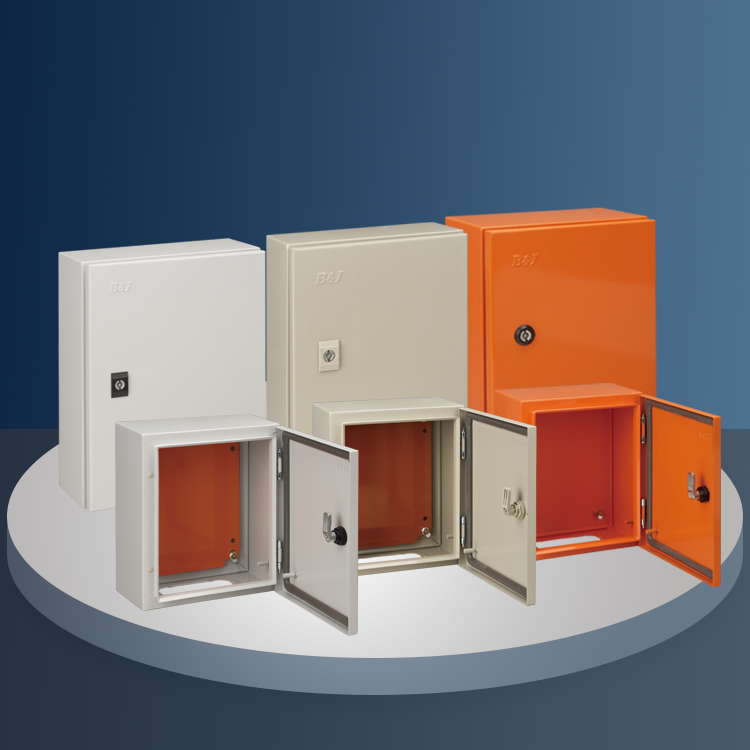
The wall mounted enclosure has become one of the most consistently ordered electrical housing solutions across industrial, commercial, and infrastructure projects in 2025. Whether you are managing a building automation system, an outdoor telecom installation, or an internal control panel upgrade, understanding which sizes sell best and what realistic pricing looks like has become a critical part of procurement planning. Buyers today are not just looking for a box — they are looking for a housing solution that matches their load requirements, available wall space, ingress protection needs, and total project budget.
This article breaks down the best-selling wall mounted enclosure sizes in today's market, explains the key factors that drive their popularity, and gives you a grounded view of the price ranges you should expect in 2025. Rather than offering vague generalities, the goal here is to give procurement engineers, electrical contractors, and facilities managers the practical reference data they need to make confident sourcing decisions. From compact single-door units to larger multi-module configurations, the market in 2025 reflects both evolving technical requirements and the practical realities of modern installation environments.
Why Certain Wall Mounted Enclosure Sizes Dominate the Market
The Relationship Between Application Demand and Size Popularity
Not all wall mounted enclosure sizes sell equally. The sizes that consistently top sales charts are those that align most directly with the most common real-world installation scenarios. In commercial buildings, for example, the density of distribution points, the number of circuit breakers per zone, and the physical constraints of electrical rooms all push demand toward mid-range enclosure sizes rather than either extreme of the size spectrum.
A wall mounted enclosure in the 300mm x 400mm to 600mm x 800mm range tends to cover the widest slice of applications — from small branch distribution boards to compact motor control centers. These dimensions accommodate standard DIN rail lengths, provide adequate cable management depth, and still allow for straightforward single-person installation on most standard wall surfaces.
Larger enclosures, while available and occasionally necessary, require more complex mounting hardware and often push installations toward floor-standing alternatives. Smaller enclosures, while space-efficient, frequently sell in volume for very specific niche applications such as junction boxes or single-device protection enclosures. The mid-range sizes dominate simply because they serve the largest number of use cases.
How Standardization Shapes Buying Patterns
Industrial standardization has played a significant role in narrowing buyer preference toward certain wall mounted enclosure dimensions. When a project engineer specifies a wall mounted enclosure based on standard DIN rail pitches, standard cable entry knockouts, and common modular component dimensions, the resulting enclosure size tends to fall within a predictable range. This standardization effect compresses the market toward a smaller set of high-volume sizes.
In practical terms, this means distributors and fabricators who stock the standard popular sizes can serve a much broader customer base with faster lead times and lower per-unit costs. Buyers benefit from better availability and more competitive pricing on these standard sizes, which in turn reinforces the buying patterns. The cycle of standardization and sales volume is self-reinforcing and directly explains why certain wall mounted enclosure sizes appear on best-seller lists year after year.
Best-Selling Wall Mounted Enclosure Sizes in 2025
Compact Sizes: 300mm x 400mm and 400mm x 500mm
The 300mm x 400mm wall mounted enclosure continues to be one of the highest-volume sizes in 2025, particularly in light commercial, residential distribution, and small equipment protection applications. Its compact footprint fits easily in utility rooms, meter cupboards, and equipment alcoves where space is genuinely limited. Despite its smaller size, this configuration typically accommodates a single DIN rail with up to 12–18 modular devices, making it practical for branch circuit protection in smaller zones.
The 400mm x 500mm wall mounted enclosure occupies a similar position in the market, often preferred when slightly more cable management depth is needed or when a second DIN rail tier is required. Both of these compact sizes are extremely popular in the smart building and home automation sectors, where control modules, miniature circuit breakers, and surge protection devices are co-housed in limited-space installations.
From a pricing perspective, compact wall mounted enclosure units in these sizes typically range from approximately $15 to $80 per unit depending on material grade, IP rating, and surface finish. Powder-coated steel versions sit at the lower to mid end of that range, while stainless steel or polycarbonate variants with higher IP ratings command premiums.
Mid-Range Sizes: 500mm x 700mm and 600mm x 800mm
The 500mm x 700mm and 600mm x 800mm wall mounted enclosure configurations are arguably the top-selling sizes in B2B and industrial procurement in 2025. These dimensions offer the right balance between internal working volume, mounting footprint, and component capacity. A well-configured 600mm x 800mm wall mounted enclosure can comfortably house a full sub-distribution board with multiple DIN rail rows, cable trunking, terminal block sections, and still leave service access space for maintenance teams.
Industries that consistently order these sizes include building management systems, HVAC control panels, factory floor sub-distribution, renewable energy inverter enclosures, and outdoor telecom equipment housing. The depth dimension — typically 200mm to 300mm for these sizes — also matters considerably, as it determines how much room is available for cable bending radius, busbar installation, and component depth clearance.
Pricing for a wall mounted enclosure in the 600mm x 800mm range typically falls between $60 and $250 per unit for standard steel versions. Units with IK10 impact resistance, IP66 weatherproofing, and multi-point locking systems naturally price higher than basic IP54 indoor enclosures. Custom cutouts, gland plates, and modular component kits add further to the per-unit cost.
Larger Format Sizes: 800mm x 1000mm and Beyond
While floor-standing enclosures often take over at the very large end of the capacity spectrum, the 800mm x 1000mm wall mounted enclosure still finds a meaningful market in 2025. This size is particularly common in industrial automation environments where wall mounting is preferred for space efficiency but the component count is high enough to justify a large-format housing.
These enclosures are frequently specified for motor control, PLC-based automation panels, and centralized junction solutions in manufacturing plants. Their higher weight — especially in steel construction — requires robust wall anchoring, often with concealed mounting plates or dedicated steel backframes embedded in reinforced wall sections. This installation requirement does add to the total project cost beyond the enclosure unit price itself.
A wall mounted enclosure at this size range typically prices between $150 and $500 or more depending on specification, with custom-engineered units for hazardous area ratings or marine environments carrying significantly higher price tags.
Key Factors That Affect Wall Mounted Enclosure Pricing in 2025
Material and Surface Treatment
The single largest driver of wall mounted enclosure pricing is the choice of base material and surface treatment. Cold-rolled steel with powder coating remains the most cost-effective option and covers the majority of standard indoor and light outdoor applications. Stainless steel — particularly grade 304 or 316 — provides superior corrosion resistance for food processing, marine, and chemical environments but adds substantially to unit cost.
Polycarbonate and GRP (glass-reinforced polyester) wall mounted enclosure options have grown in popularity for outdoor and corrosive environments where steel would require frequent maintenance. These materials carry a price premium over standard steel but often represent a lower total cost of ownership over the product's service life when factoring in reduced maintenance and replacement frequency.
IP and IK Ratings
The required IP rating has a direct and significant impact on wall mounted enclosure pricing. An IP54-rated enclosure for a dry indoor environment will cost considerably less than an IP66 or IP67 enclosure designed for outdoor installation or washdown environments. The difference in price reflects the additional engineering in gasketing, door compression mechanisms, and sealing around cable entries.
Similarly, IK impact protection ratings affect price. A standard IK07 or IK08 enclosure suits most light industrial environments, while IK10-rated units — which must withstand 20 joules of impact — require heavier gauge steel and reinforced mounting points. Each step up in rating adds material cost and manufacturing complexity to the wall mounted enclosure unit.
Customization and Modular Accessories
A significant portion of wall mounted enclosure orders in 2025 are not for bare-shell units but for enclosures supplied with modular component kits — DIN rails, cable trunking, mounting plates, gland plates, and pre-drilled backplates. These integrated kits reduce field labor time and assembly errors, making them attractive to panel builders and system integrators even at a higher unit price.
Custom CNC cutouts for displays, meters, switches, and cable entries also add to pricing. For high-volume orders, custom tooling costs are amortized across the run, keeping per-unit additions modest. For low-volume or prototype orders, custom machining can add meaningfully to the total cost per wall mounted enclosure unit.
Comparing Standard vs. Custom Wall Mounted Enclosure Orders
When Standard Sizes Are the Right Choice
For the majority of electrical panel and distribution board applications, a standard wall mounted enclosure size will cover the requirement without any need for custom fabrication. Standard sizes benefit from immediate stock availability, established accessory ecosystems, and well-documented installation hardware. Engineers and buyers familiar with a standard size also have a reliable cost baseline for project budgeting.
When delivery lead time is a constraint — which it frequently is in construction and infrastructure projects — selecting a standard wall mounted enclosure from an established size range is the practical choice. Custom orders typically add two to six weeks to the supply chain, which can create knock-on delays across an entire project timeline.
When Custom Configurations Add Real Value
Custom wall mounted enclosure configurations make genuine sense in several specific scenarios. When an application requires unusual dimensions to fit a constrained architectural space, when the internal component layout demands non-standard DIN rail positions or special backplate configurations, or when the environment demands a combination of ratings not available in standard products, custom fabrication delivers measurable value.
For high-volume OEM applications — such as a machinery manufacturer building hundreds of identical control panels per year — a custom wall mounted enclosure with pre-drilled mounting points, branded labeling, and specific color requirements can reduce assembly time enough to justify the tooling investment. The break-even calculation between custom and standard typically depends on annual order volume, assembly labor rates, and the degree of deviation from standard dimensions.
FAQ
What is the most common wall mounted enclosure size for commercial building distribution panels?
The most commonly specified wall mounted enclosure for commercial building sub-distribution applications in 2025 is the 600mm x 800mm configuration. This size accommodates multiple DIN rail rows, cable management trunking, and adequate service clearance for most branch circuit protection setups. It also ships in standard configurations from most major suppliers, ensuring reliable availability and competitive pricing for commercial project budgets.
How does IP rating affect the price of a wall mounted enclosure?
IP rating affects wall mounted enclosure pricing primarily through the cost of gasketing, door sealing mechanisms, and manufacturing precision required to achieve consistent ingress protection across production runs. An IP66-rated unit will typically cost 30% to 80% more than a comparable IP54 unit of the same size and material, depending on the enclosure design. For outdoor or washdown environments, the investment in higher IP ratings is generally justified by longer service life and reduced maintenance requirements.
Is a polycarbonate wall mounted enclosure suitable for industrial environments?
Polycarbonate wall mounted enclosure units are well-suited to many industrial environments, particularly where corrosion resistance, weight reduction, or UV stability is a priority. They perform reliably in chemical processing areas, outdoor installations, and light industrial zones. However, polycarbonate units are not appropriate for high-impact environments or applications requiring very heavy internal component loads, where steel-bodied enclosures provide superior structural integrity. The selection between polycarbonate and steel should always be matched to the specific environmental and mechanical demands of the installation.
What accessories are typically included with a modular wall mounted enclosure kit?
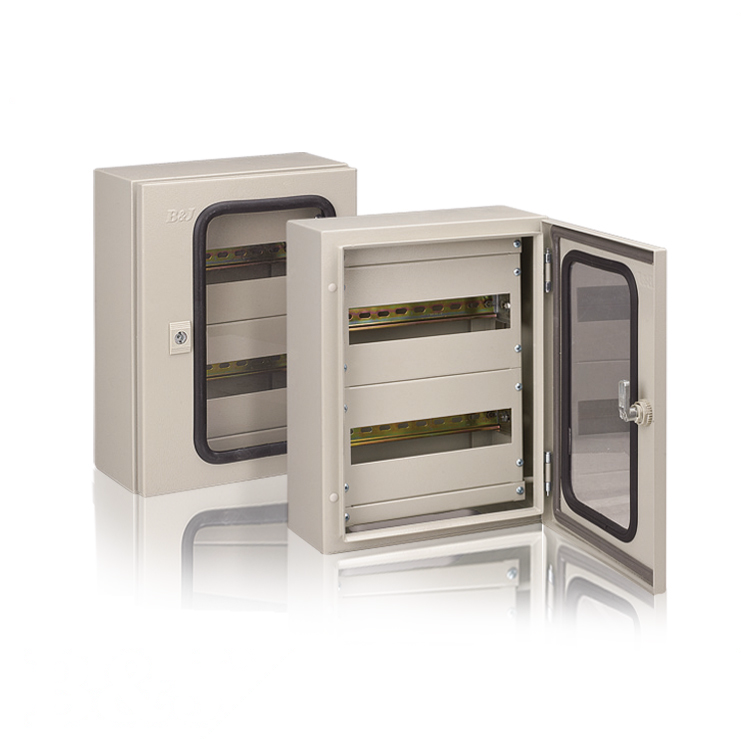
A modular wall mounted enclosure kit typically includes a pre-fitted DIN rail section, cable management trunking, a mounting backplate, gland entry plates at the base or top of the enclosure, and sometimes pre-installed earthing studs or terminal block sections. Some kits also include a transparent inner door for additional protection of live components while maintaining visual access. The specific contents vary by supplier and enclosure size, so reviewing the kit specification sheet before ordering is important to confirm that all required components are included.
Table of Contents
- Why Certain Wall Mounted Enclosure Sizes Dominate the Market
- Best-Selling Wall Mounted Enclosure Sizes in 2025
- Key Factors That Affect Wall Mounted Enclosure Pricing in 2025
- Comparing Standard vs. Custom Wall Mounted Enclosure Orders
-
FAQ
- What is the most common wall mounted enclosure size for commercial building distribution panels?
- How does IP rating affect the price of a wall mounted enclosure?
- Is a polycarbonate wall mounted enclosure suitable for industrial environments?
- What accessories are typically included with a modular wall mounted enclosure kit?