 EN
EN

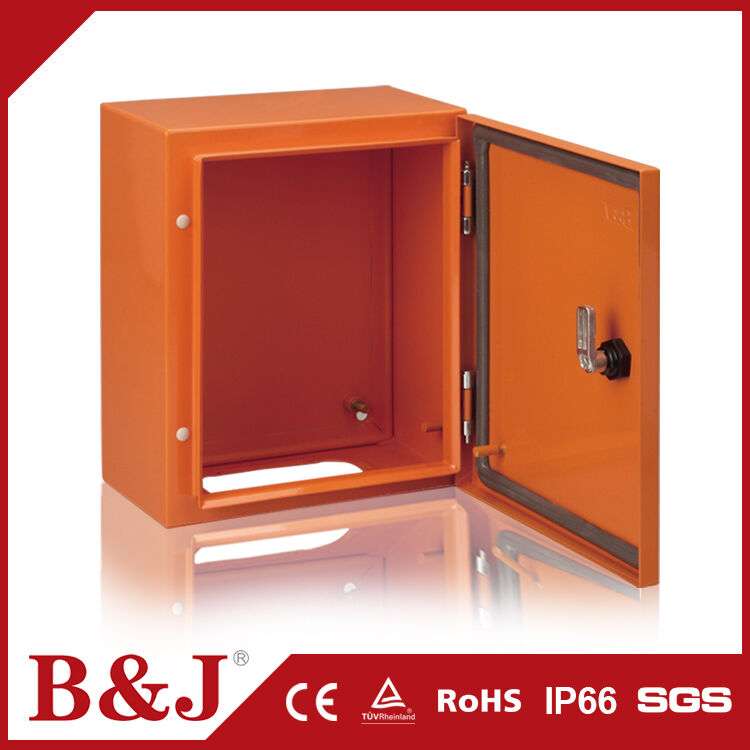
A wall mounted enclosure installed outdoors faces relentless environmental stress. Rain, humidity, direct sunlight, and temperature swings work together to degrade materials, compromise seals, and ultimately put the electrical or electronic components inside at risk. Understanding how to weatherproof these enclosures properly is not a matter of preference — it is a fundamental engineering requirement for any outdoor installation that needs to stay reliable over the long term.
This article explores the core weatherproofing challenges that affect any outdoor wall mounted enclosure and provides practical, engineering-grounded solutions for managing rain infiltration and UV degradation. Whether you are specifying enclosures for an industrial facility, a utility installation, or a commercial building, the principles covered here will help you make better decisions and avoid costly failures in the field.
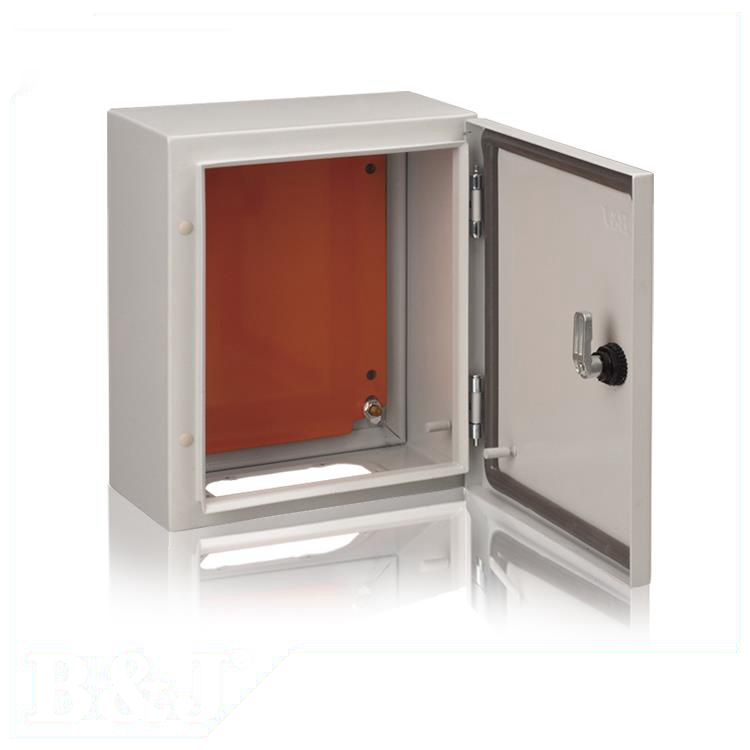
Why Rain and UV Are the Two Dominant Threats
The Mechanics of Rain Infiltration
Water entry is the most immediate threat to a wall mounted enclosure. Rain does not only fall vertically — wind-driven rain strikes enclosure surfaces at steep angles, forcing water into gaps that would otherwise seem adequate. Horizontal joints, cable entry points, door seams, and mounting penetrations are all potential ingress paths when rainfall is combined with lateral wind pressure.
Beyond direct rain, condensation is a secondary moisture problem that many installers underestimate. When ambient temperatures drop at night after warm daytime conditions, moisture in the air inside the enclosure condenses on interior surfaces. Over weeks and months, this cyclic condensation accumulates and can cause corrosion, tracking on circuit boards, and insulation breakdown on conductors.
A well-weatherproofed wall mounted enclosure must address both direct rain infiltration and internal condensation through a combination of sealing strategy and ventilation management. Treating only one of these without addressing the other will result in a partial solution that still leads to failures over time.
How UV Radiation Damages Enclosure Materials
Ultraviolet radiation from sunlight attacks polymer-based materials at the molecular level. Gaskets, cable glands, plastic housings, and surface coatings are all susceptible to photodegradation when exposed to prolonged UV without adequate protection. The visible signs — cracking, chalking, color fading, and surface brittleness — are the end stage of a chemical breakdown process that begins long before any visible damage appears.
For a wall mounted enclosure made from polycarbonate, fiberglass, or coated steel, UV exposure affects different components at different rates. Polycarbonate degrades faster than fiberglass under UV unless it incorporates UV stabilizers. Powder-coated steel is more UV-resistant in terms of structural integrity, but the coating itself can chalk and degrade, reducing corrosion resistance over time.
UV degradation is particularly problematic at cable entry points and door gaskets. Once these elastomeric seals begin to crack due to UV exposure, the IP rating of the enclosure drops significantly. A wall mounted enclosure that originally met IP66 standards can degrade to a much lower protection level within a few years if the sealing materials are not UV-stabilized or replaced on schedule.
IP Rating Selection for Rain-Exposed Installations
Understanding IP66 and What It Guarantees
The IP (Ingress Protection) rating system defined by IEC 60529 is the primary international standard for evaluating how well an enclosure resists solid particles and liquids. For any wall mounted enclosure intended for outdoor use in rain-exposed environments, IP66 is the practical minimum. IP66 certifies protection against powerful water jets from any direction, which covers the conditions created by wind-driven rain, high-pressure washdowns, and driving storm conditions.
IP67 and IP68 ratings extend protection to temporary and continuous submersion respectively, but these are typically not required for wall-mounted installations above grade unless the site is prone to flooding or the enclosure is positioned in a splash zone. For the majority of outdoor wall mount applications, IP66 provides the right balance of protection and practical sealing design.
It is important to understand that an IP rating reflects the enclosure's performance as tested in the factory under controlled conditions. That rating is only maintained in the field if installation is done correctly — meaning all cable glands are properly torqued, blanking plugs are installed in unused knockouts, and the door gasket is seated evenly without pinching or gaps. A wall mounted enclosure with an IP66 rating will not perform to that rating if the installation introduces unsealed penetrations.
Selecting the Right Enclosure Material for Rain Resistance
Material selection for a wall mounted enclosure directly determines how well it resists rain-related degradation over time. Stainless steel offers the highest corrosion resistance and is preferred in coastal, chemical, or high-humidity environments. Hot-dip galvanized or powder-coated carbon steel is suitable for most industrial and commercial outdoor installations when the coating integrity is maintained.
Fiberglass-reinforced polyester (GRP) enclosures combine good rain resistance with inherent UV stability and are widely used in telecom and utility outdoor applications. They do not rust, and their non-metallic composition eliminates galvanic corrosion issues at mounting points. However, they typically carry a higher unit cost than painted steel alternatives.
Regardless of the base material, the sealing system — the door gasket, cable entry points, and lid-to-body interface — ultimately determines rain performance. A wall mounted enclosure with premium-grade material but poorly designed or degraded seals will fail in rain conditions just as quickly as a lower-grade unit. Sealing system quality deserves as much attention as the housing material itself.
UV Protection Strategies for Outdoor Enclosures
Material and Coating Choices That Resist UV Degradation
The most effective long-term UV protection for a wall mounted enclosure starts with material selection. UV-stabilized polycarbonate, GRP with UV-inhibiting gel coats, and powder coatings formulated with UV-resistant pigments all outperform standard materials in prolonged outdoor exposure. When specifying a wall mounted enclosure for a sun-exposed installation, these material attributes should appear explicitly in the product specification or technical datasheet.
For metal enclosures, two-coat powder coating systems with a UV-resistant topcoat provide significantly better UV durability than single-coat finishes. The topcoat acts as a sacrificial UV absorber, protecting the primer and base metal beneath. In high-UV environments such as rooftop installations, arid climates, or equatorial regions, specifying a TGIC polyester powder coat or a polyurethane topcoat is a practical step that extends service life measurably.
Gasket materials also need UV consideration. EPDM rubber is the standard choice for outdoor enclosure seals because of its strong UV and ozone resistance. Neoprene and PVC gaskets are less UV-stable and should be avoided in applications where the enclosure door or lid receives direct sunlight. A wall mounted enclosure with EPDM seals will maintain its IP rating for far longer under UV exposure than one using standard rubber or PVC compounds.
Physical Shading and Installation Orientation
Beyond material selection, the physical placement and orientation of the wall mounted enclosure can reduce UV exposure significantly. Mounting the enclosure on a north-facing wall in the northern hemisphere, or under a structural overhang, cuts direct solar irradiance substantially without any modification to the enclosure itself. This is often the most cost-effective UV mitigation strategy available at the design stage.
Where shading is not possible due to site constraints, a canopy or sun shield mounted above the wall mounted enclosure provides targeted protection for the door and top panel — the surfaces that receive the most direct UV. These shields are available as factory accessories for many enclosure product lines and can also be fabricated on-site from aluminum or galvanized sheet without complex engineering.
Installation orientation also affects rain drainage. A wall mounted enclosure should always be mounted with cable entry points facing downward where possible, and with the door hinge side positioned to minimize water accumulation at the door-to-body seal. These small orientation decisions, made during installation planning, meaningfully reduce the rate of weather-related seal degradation over the enclosure's service life.
Practical Weatherproofing Measures During and After Installation
Cable Entry and Penetration Management
Cable entries are statistically the most common point of water infiltration in an outdoor wall mounted enclosure. Every cable penetration that is not properly sealed is a direct pathway for rain, insects, and humid air. Using correctly sized cable glands with IP-rated sealing inserts is the baseline requirement. The gland must match the cable outer diameter closely — oversized glands or improperly torqued compression rings will not maintain an effective seal under sustained rain exposure.
Where multiple cables enter through a single large knockout, a multi-cable transit (MCT) block provides a more reliable seal than individual glands packed together. MCT systems use compressible sealing modules that conform to each cable diameter individually, maintaining rated sealing performance even when cable diameters vary. For any wall mounted enclosure with dense wiring, this approach is more reliable in long-term outdoor service.
Unused knockouts must be sealed with blanking plugs rated to the same IP level as the enclosure. A single unsealed knockout will negate the enclosure's rain protection regardless of how well every other entry point is managed. This detail is frequently overlooked during installation and is a common root cause of moisture-related failures discovered during maintenance inspections.
Condensation Control and Maintenance Protocols
Controlling condensation inside a wall mounted enclosure requires managing the exchange of humid air without opening a path for liquid water. Breather vents — small pressure-equalizing vents incorporating a hydrophobic membrane — allow air pressure equalization while blocking liquid water ingress. These vents prevent the vacuum effect that draws humid outside air through micro-gaps when enclosures cool rapidly at night.
In environments with high daily temperature swings, adding a small silica gel desiccant pack inside the wall mounted enclosure provides supplemental moisture absorption. Desiccant packs are inexpensive and effective, but they require periodic replacement — typically annually in moderate climates and more frequently in humid coastal or tropical environments. Neglecting this maintenance step allows the desiccant to become saturated and ineffective.
A structured maintenance schedule for any outdoor wall mounted enclosure should include annual inspection of door gaskets for cracking or compression set, verification that all cable glands remain properly torqued, visual inspection of external coatings for chalking or corrosion spotting, and replacement of desiccant packs as needed. Enclosures that receive this level of maintenance routinely achieve service lives of fifteen years or more even in challenging outdoor conditions.
FAQ
What IP rating should a wall mounted enclosure have for outdoor rain exposure?
For outdoor installations exposed to rain, a wall mounted enclosure should carry a minimum IP66 rating. IP66 certifies protection against powerful water jets from any direction, which covers wind-driven rain and storm conditions. IP67 or IP68 ratings are not necessary for most above-grade wall mount applications unless the site carries a flooding or immersion risk.
How often should the gaskets on an outdoor wall mounted enclosure be inspected?
Gaskets on an outdoor wall mounted enclosure should be visually inspected at least once per year. In high-UV environments or locations with extreme temperature cycling, semi-annual inspection is advisable. Signs of gasket failure include visible cracking, hardening, loss of elasticity, or visible compression set where the gasket no longer fully contacts the sealing surface. EPDM gaskets generally last longer under UV exposure than neoprene or PVC alternatives.
Can a standard indoor wall mounted enclosure be modified for outdoor use?
An indoor-rated wall mounted enclosure is generally not suitable for outdoor weatherproofing without significant modification. Indoor units typically lack UV-stabilized materials, rated door gaskets, and IP-rated cable entry systems. Adding aftermarket seals and glands may improve rain resistance to some degree, but the base material — particularly coatings and any plastic components — will still degrade under UV exposure faster than a purpose-built outdoor unit. For reliable outdoor performance, specifying an enclosure designed and rated for outdoor use from the outset is the more dependable approach.
Does mounting orientation affect how well a wall mounted enclosure resists rain?
Yes, mounting orientation meaningfully affects rain performance. Positioning cable entries on the bottom of the wall mounted enclosure allows gravity drainage and prevents water from pooling at entry points. Facing the enclosure door away from the prevailing wind direction reduces the intensity of wind-driven rain against the door seal. Where possible, mounting under an overhang or on a north-facing wall reduces both UV exposure and direct rain impact, extending the service life of seals and coatings significantly.
Table of Contents
- Why Rain and UV Are the Two Dominant Threats
- IP Rating Selection for Rain-Exposed Installations
- UV Protection Strategies for Outdoor Enclosures
- Practical Weatherproofing Measures During and After Installation
-
FAQ
- What IP rating should a wall mounted enclosure have for outdoor rain exposure?
- How often should the gaskets on an outdoor wall mounted enclosure be inspected?
- Can a standard indoor wall mounted enclosure be modified for outdoor use?
- Does mounting orientation affect how well a wall mounted enclosure resists rain?