 EN
EN

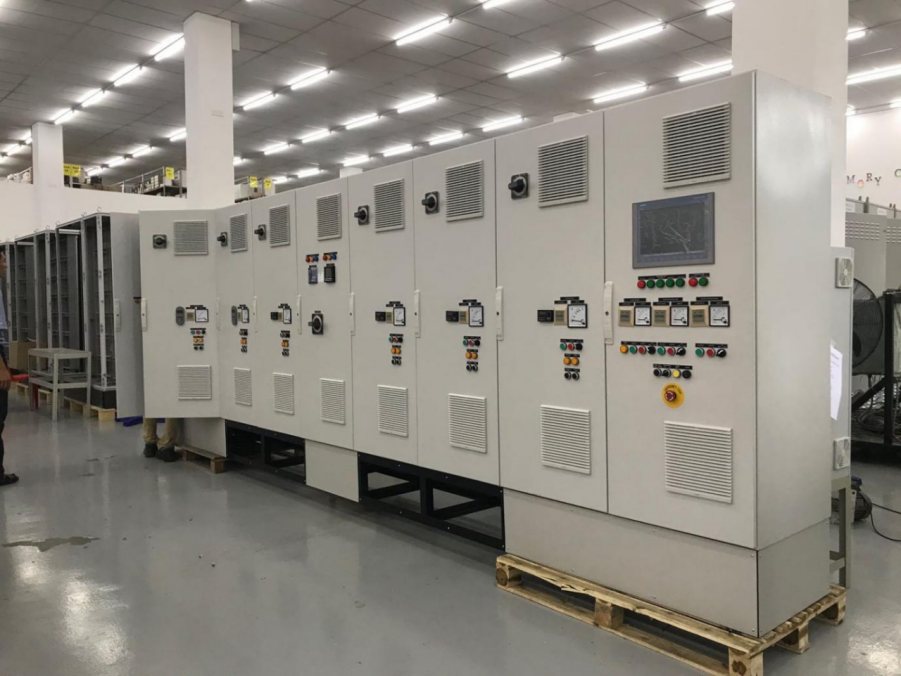
Floor Standing Electrical Cabinets: Designing for Heavy-Duty Industrial Use
When power requirements exceed the capacity of wall-mounted systems, floor-standing electrical cabinets become the indispensable backbone of industrial power distribution. These units are far more than just "larger boxes"; they are complex structural systems engineered to house massive arrays of circuit breakers, transformers, busbars, and sensitive control logic. In heavy-duty industries like mining, oil and gas, and large-scale manufacturing, these cabinets must maintain a safe operating environment under high-vibration, high-temperature, and often corrosive settings. For B2B infrastructure projects, selecting a robust floor-standing cabinet is one of the most critical safety and reliability decisions in the design phase.
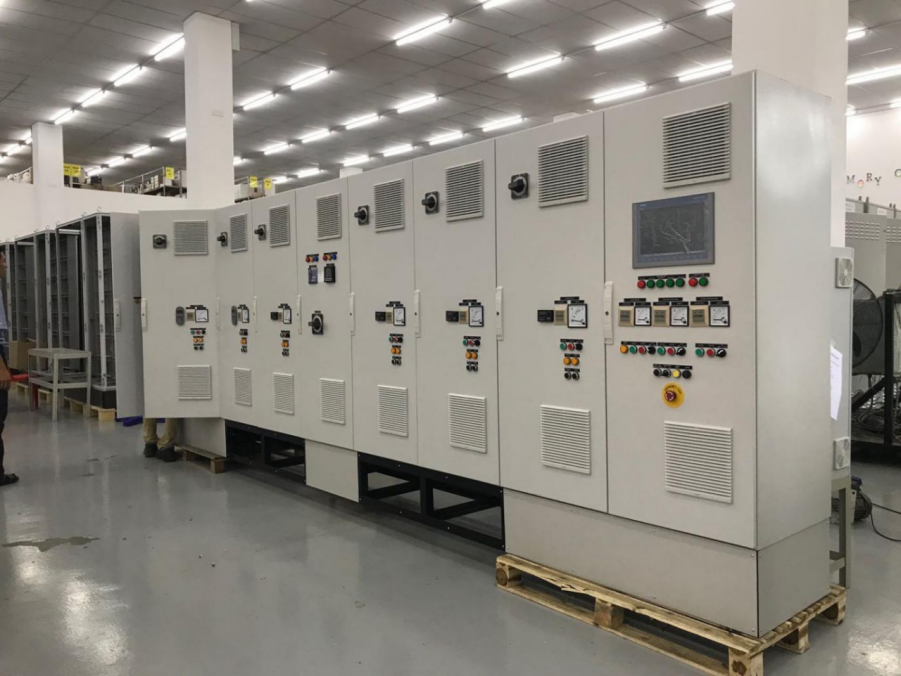
1. Structural Integrity: The Foundation of Reliability
A floor-standing cabinet must support significant internal weight—sometimes thousands of kilograms of copper busbars and heavy-duty breakers. If the frame is weak, the enclosure can "wrack" or twist, causing the door seals to fail and potentially leading to internal electrical faults.
- Advanced Frame Engineering: High-end industrial cabinets, like B&J’s floor-standing series, utilize a modular frame design. We use 9-fold or 16-fold profiles (multi-bent steel) which provide significantly higher rigidity than simple U-profiles. This ensures that the cabinet maintains its squareness and IP seal even when fully loaded or during seismic events.
- Reinforced Base and Plinth Systems: The base is often the first point of failure in damp or industrial environments. A heavy-duty, reinforced plinth raises the cabinet off the floor (typically by 100mm or 200mm). This protects the enclosure from moisture, allows for easier cable routing from below, and simplifies the installation of large cable glands.
- Lifting and Logistics Safety: For the safe transport of these multi-hundred-kilogram units, integrated lifting eyes and heavy-duty casters (optional for mobile units) are essential. Our cabinets are designed to be moved via crane or forklift while fully populated, minimizing the risk of structural deformation.
2. Thermal Management: The Science of Preventing "Thermal Runaway"
Dense component packing in a floor-standing unit generates significant heat. If that heat is not managed, it leads to "thermal runaway," where rising resistance causes more heat, eventually leading to component failure or fire.
- Active vs. Passive Cooling: For moderate loads, specialized louvers and roof vents can provide enough natural convection. For high-power density, active filter fans or even integrated air conditioning units are required to maintain the internal temperature below the typical 55°C limit for electronic components.
- Airflow Simulation: During the design phase, B&J’s engineers can perform airflow simulations based on your component heat output. We ensure that "cool" air enters at the bottom and "hot" air is exhausted at the highest point, avoiding "hot spots" behind the breakers.
- Condensation Control: In environments with high temperature swings, internal condensation is a major risk. We utilize integrated anti-condensation heaters and pressure-equalization vents to ensure the internal environment stays dry, regardless of external humidity.
3. Modular Integration and Global Scalability
Modern industrial projects are rarely static; they grow and evolve. A floor-standing cabinet system should be modular to allow for future expansion.
- Baying and Joining Kits: These allow multiple cabinets to be securely bolted together side-by-side (baying) to create a continuous, seamless lineup. This allows for a shared, high-current busbar system to run through the entire suite of cabinets.
- Internal Segregation (Forms of Separation): Following the IEC 61439 standard, we provide internal barriers (Form 1 through Form 4). These barriers isolate the busbars from the functional units and cable entries. This "Form 4" separation is the gold standard for safety, as it allows a technician to work on one circuit while the rest of the cabinet remains live and safe.
- Flexible Mounting Plates: Full-height or partial-height mounting plates can be adjusted in depth, allowing for the installation of components of different sizes and improving cable access.
4. Safety and Access Control: Protecting People and Power
- Multi-Point Locking Systems: For doors up to 2.2 meters tall, a simple single-point latch is insufficient. We utilize 3-point or 4-point locking systems that ensure the door stays flat and the gasket is compressed evenly along the entire frame, maintaining the IP55 or IP66 rating.
- Arc Flash Mitigation: Beyond structural strength, the cabinet acts as a containment vessel. Our heavy-duty steel cabinets are rated for IK10 impact resistance and are designed to direct the explosive energy of an arc flash upward, away from operators.
- Interlock Mechanisms: We can integrate door interlocks that prevent the enclosure from being opened while the main disconnect switch is in the "ON" position, a mandatory requirement for many industrial safety audits.
Conclusion: The B&J Heavy-Duty Advantage
B&J Electrical’s floor-standing cabinets are engineered for the world's most demanding projects—from the high-vibration rooms of a petrochemical plant to the high-density rows of a global data center. With 25 years of manufacturing experience, we ensure that every cabinet meets the most rigorous international standards (IP55/IP66, IK10, CE, TUV). When you source your heavy-duty cabinets from B&J, you are investing in a proven platform that prioritizes structural safety, thermal efficiency, and long-term operational reliability.
Table of Contents
- Floor Standing Electrical Cabinets: Designing for Heavy-Duty Industrial Use
- 1. Structural Integrity: The Foundation of Reliability
- 2. Thermal Management: The Science of Preventing "Thermal Runaway"
- 3. Modular Integration and Global Scalability
- 4. Safety and Access Control: Protecting People and Power
- Conclusion: The B&J Heavy-Duty Advantage